step by step guide to choose conference service providers for your meeting
Choosing the Right Translation Service : A Comprehensive Guide
Introduction
By 2030, Africa will be home to the world's largest working-age population. By 2050, one in four people on the planet will be African. This is not a distant demographic forecast — it is a market reality that is already reshaping global business strategy.
Yet most international companies entering African markets make the same mistake: they translate their content and call it localization. They take a campaign that worked in Paris or London, run it through a translation tool, and expect it to resonate in Dakar, Ouagadougou, or Kigali.
It does not work. And the reason is simple: Africa’s consumers are not just speaking different languages. They are living different cultural realities, operating within different emotional frameworks, and responding to entirely different reference points.
This is where transcreation changes everything.
This guide explains what Africa’s demographic dividend actually means for businesses, why standard translation falls short, and how professional transcreation services, provided by agencies like barrierfri (http://barrierfri.com) help companies build brands that genuinely connect with African audiences—and convert.
1. What Is Africa’s Demographic Dividend—and Why Does It Matter for Business?
The demographic dividend refers to the economic growth potential that arises when a country’s working-age population is larger than its dependent population. Africa is on the cusp of this transition at scale.
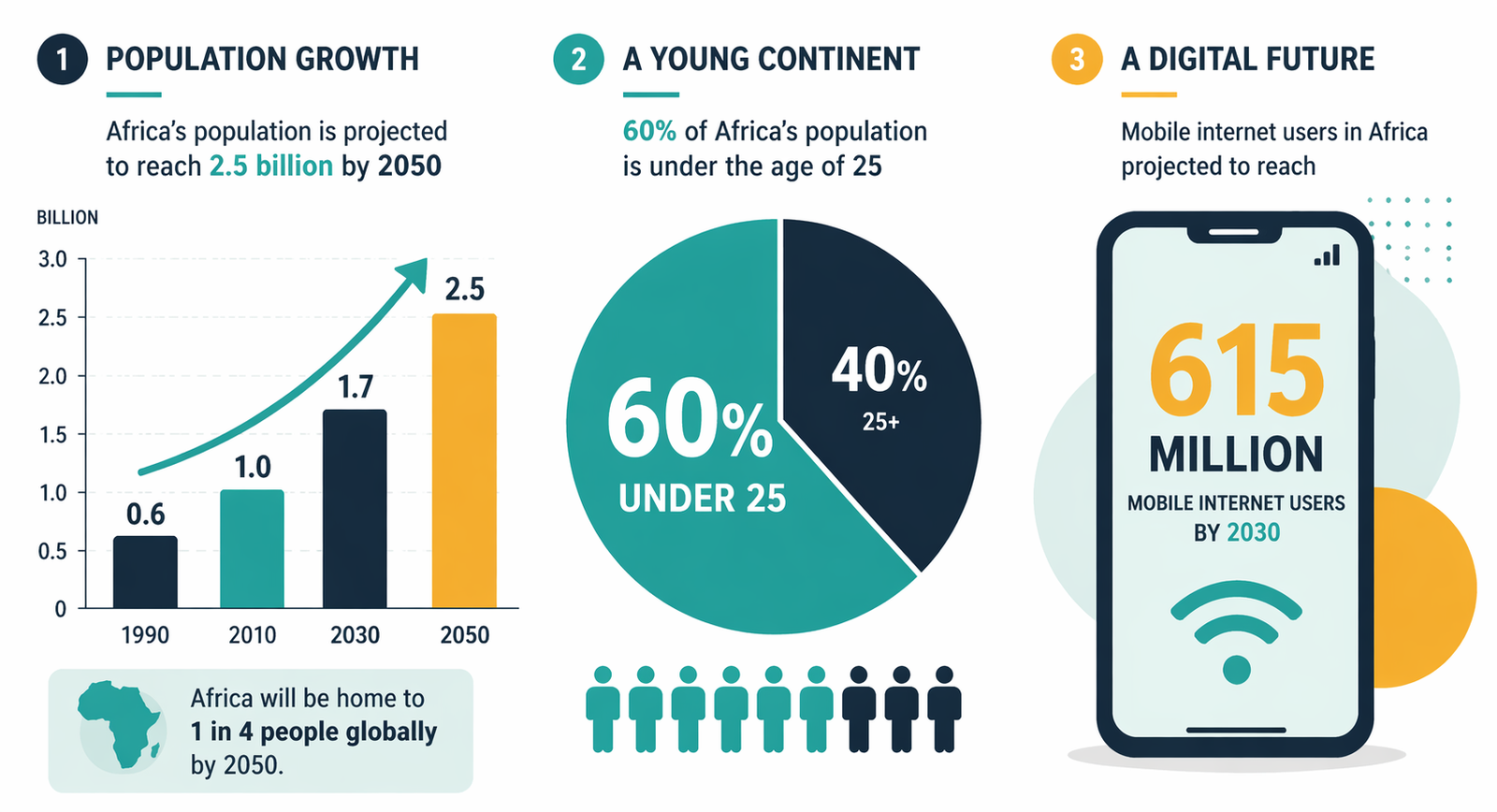
Today, approximately 60% of Africa’s 1.4 billion people are under the age of 25. The continent is rapidly urbanizing—cities like Lagos, Ouagadougou, Kigali, Abidjan, and Dakar are growing faster than almost anywhere else in the world. Mobile internet penetration is accelerating, with hundreds of millions of Africans now accessing digital content, e-commerce, and social media for the first time.
This creates a consumer base that is:
- Young and aspirational—with rising disposable incomes and strong brand awareness
- Multilingual and code-switching—moving fluidly between French, English, Portuguese, and local languages depending on context
- Culturally specific—with distinct tastes, humor, references, and values that vary significantly across regions
- Digitally native—engaging primarily through mobile, social media, and video content
For companies that want to capture this opportunity, the question is not whether to communicate in local languages. It is whether they can communicate with the cultural authenticity that this audience demands.
2. Why Standard Translation Is Not Enough
Translation converts words and meaning from one language to another. It is accurate. It is necessary. But on its own, it is insufficient for marketing, advertising, and brand communication in Africa.
Here is why.
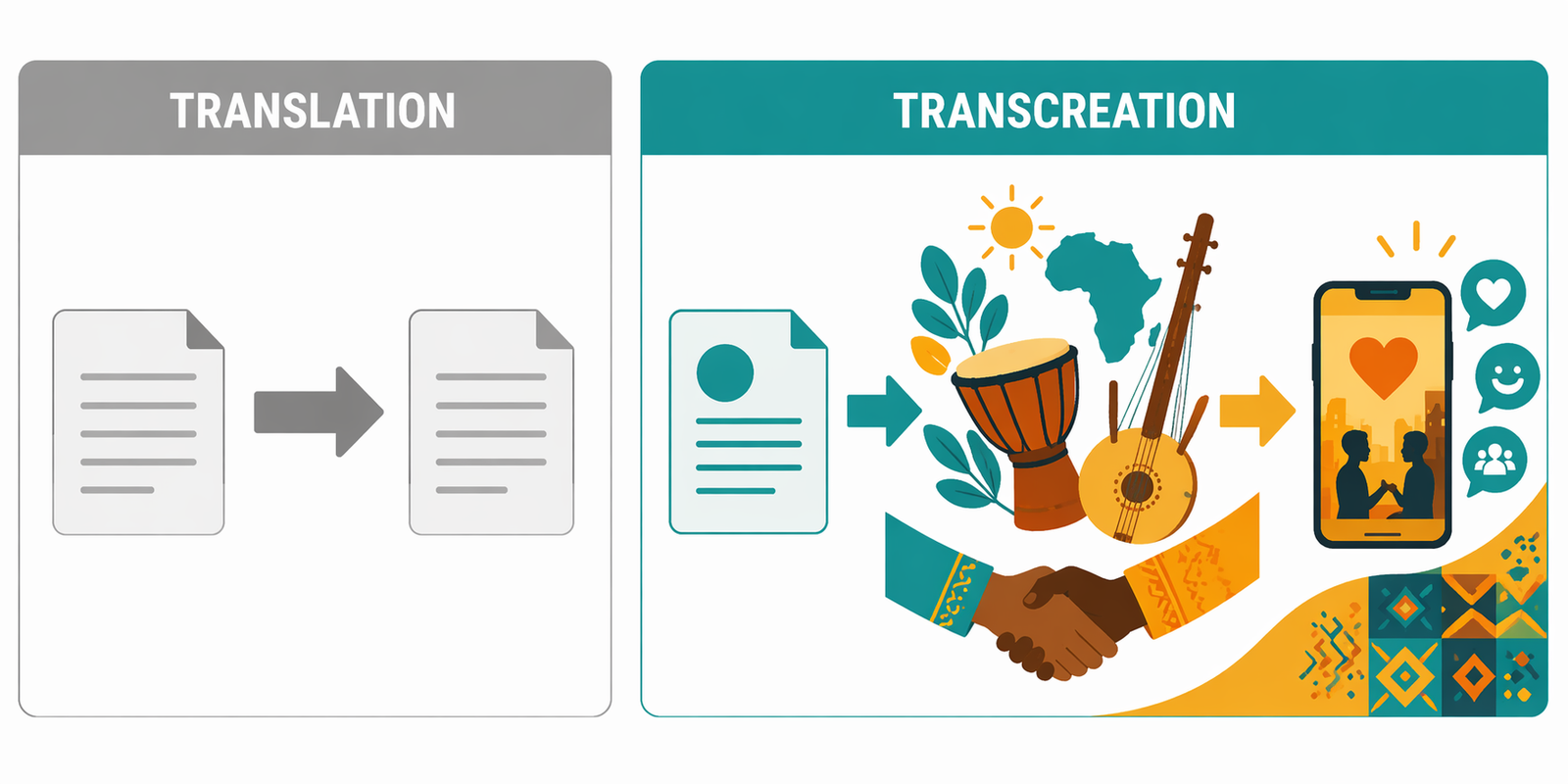
A campaign tagline that works in English may have no equivalent emotional impact when translated into French or Portuguese. A humorous strategy that lands in London may fall flat—or worse, offend—in Ouagadougou or Kigali. A product benefit framed around individualism may resonate poorly in markets where communal values are central to consumer identity.
These are not translation errors. They are cultural misalignments—and they cannot be fixed with better translation software.
Consider a real-world scenario: a European financial services company wants to launch a savings product targeting young adults in Francophone West Africa. Their original campaign uses the concept of “building your future independently.” Translated literally, the message sounds cold and individualistic to an audience where financial decisions are typically made within extended family networks. The product is good. The translation is accurate. But the campaign does not convert—because the cultural frame is wrong.
Transcreation solves this.
3. What Transcreation Actually Does
Transcreation—a blend of translation and creative adaptation—goes beyond converting words. It reimagines your content from the ground up for a specific cultural audience, preserving the emotional intent and persuasive impact of the original while replacing cultural references, idioms, humor, and framing with equivalents that resonate locally.
In practice, transcreation for African markets involves:
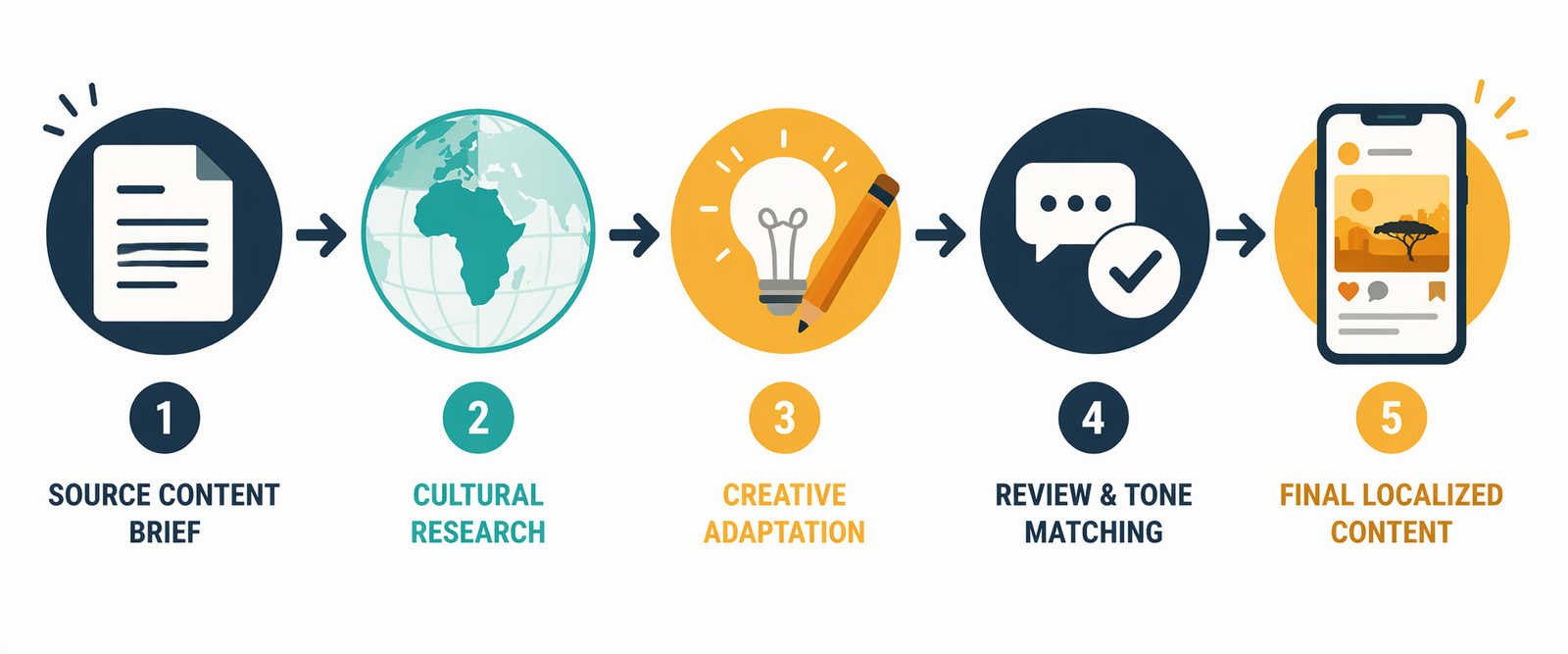
Adapting idioms and expressions. Phrases that carry emotional weight in one language often have no direct equivalent in another. A transcreator finds the local expression that delivers the same feeling—not the same words.
Reframing cultural references. A campaign built around sports metaphors may need to shift from football references in Anglophone markets to different cultural touchpoints in Francophone or Lusophone contexts. Music, food, family structures, seasonal events, and community rituals all vary—and all carry marketing potential when used correctly.
Adjusting tone for cultural registers. The degree of formality, the use of humor, the role of authority figures, and the appropriate level of emotional directness all differ across African regions and language groups. Transcreation calibrates these elements deliberately.
Rewriting calls to action. A CTA that drives clicks in English may need to be completely reimagined—not just translated—to achieve the same conversion rate in French or Portuguese-speaking markets.
The result is content that does not feel translated. It feels written for that audience, because in a meaningful sense, it was.
4. The Three African Markets Where Transcreation Has the Highest ROI
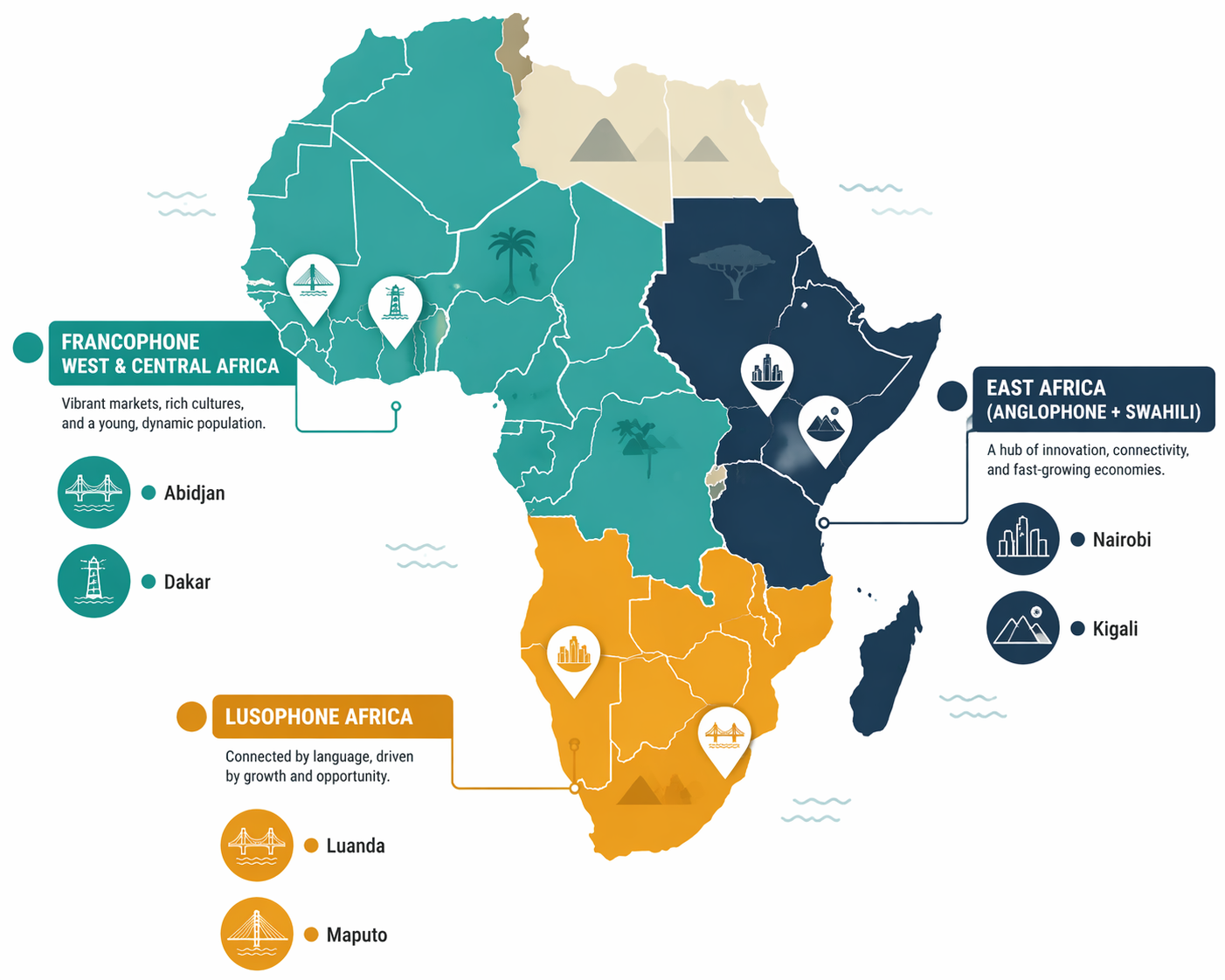
Africa is not one market. It is 54 countries, hundreds of ethnic groups, and three major international language zones. That said, the demographic dividend is most immediately pronounced—and the transcreation opportunity most commercially significant—in three areas.
Francophone West and Central Africa
Home to over 400 million people across 20+ countries, this is the fastest-urbanizing region in the world. French is the language of business, education, and media—but it sits alongside dozens of local languages, including Wolof, Dioula, Lingala, and Moore. Brands that transcreate into culturally resonant French—not European French, but African French—gain an immediate credibility advantage over competitors who simply translate.
East Africa (Anglophone + Kinyarwanda + Swahili)
Kenya, Rwanda, Uganda, and Tanzania represent one of the continent’s most digitally advanced consumer markets. Rwanda’s middle class is growing rapidly. Kenya’s tech ecosystem is globally recognized. Here, Swahili and Kinyarwanda are the languages of everyday life, while English serves professional and aspirational contexts. Transcreation that navigates this register shift effectively—knowing when to be formal and when to be warm—builds brand trust fast.
Lusophone Africa
Angola and Mozambique, SAO tome e Principe, Guinea Bissau and Cabo Verde are often overlooked by international brands, yet both have significant natural resource wealth and rapidly growing urban middle classes. Portuguese-speaking Africa is chronically underserved by content—which means brands that invest in quality transcreation here face virtually no local-language competition.
5. Industries That Benefit Most from Transcreation in Africa
While any brand entering African markets can benefit from transcreation, some industries see the most immediate and measurable impact.
Financial services and fintech.
Africa’s fintech explosion—from M-Pesa in Kenya to Orange Money in West Africa—is driven by a young, mobile-first population that is often skeptical of traditional banking messaging. Transcreated campaigns that speak to real financial needs in culturally familiar terms drive account openings, app downloads, and transaction volumes.
Fast-moving consumer goods (FMCG).
Food, personal care, and household products are categories where cultural resonance is everything. What signals quality, trust, or aspiration in one region may signal nothing—or the wrong thing—in another. Transcreation ensures your packaging copy, TV spots, and social ads hit the right emotional notes everywhere.
Healthcare and public health.
Behavior change communication—vaccination campaigns, family planning messaging, disease prevention—has a measurable impact on public health outcomes when it is culturally adapted. Literal translation of health messages frequently fails; transcreation dramatically improves comprehension and compliance.
Education and EdTech.
With one of the world’s youngest populations and rapidly expanding internet access, Africa is a critical growth market for educational content. E-learning platforms, training materials, and academic content that are transcreated rather than simply translated achieve significantly higher engagement and completion rates.
NGOs and international organizations.
For organizations working on development, humanitarian response, or policy advocacy, the ability to communicate authentically with local communities—in their language and cultural frame—makes the difference between programs that work and programs that don’t.
6. How to Choose a Transcreation Partner for African Markets
Not every language agency or LSP is equipped for transcreation. Here is what to look for when selecting a partner for African market entry or expansion.
Cultural insiders, not just language experts. The best transcreators are native speakers who have lived in the target market and understand its cultural landscape from the inside. A French translator based in Paris is not the same as a Francophone African transcreator who understands the specific register, humor, and reference points of audiences in Abidjan or Dakar.
Marketing and creative background. Transcreation requires copywriting instincts, not just linguistic accuracy. Look for partners who can demonstrate experience with brand campaigns, advertising copy, and persuasive content—not just document translation.
Pan-African coverage with local depth. Africa’s linguistic diversity means that a single agency covering all three major language zones—Anglophone, Francophone, and Lusophone—with genuine local expertise in each is rare and valuable.
Transparency about the process. A professional transcreation partner will provide a creative brief before starting, deliver multiple options for key phrases or taglines, and explain the cultural rationale behind their adaptation choices. If an agency simply returns a finished translation with no explanation, they are not doing transcreation.
Conclusion
Africa’s demographic dividend is not a future opportunity. It is a present reality, unfolding right now in the streets of Kigali, Abidjan, Ouagadougou, and Luanda. The companies that will capture this market are not the ones with the biggest budgets—they are the ones with the sharpest cultural intelligence.
Transcreation is how that intelligence becomes communication. It is the difference between a brand that speaks to African consumers and a brand that speaks with them.
If your company is planning to enter or expand into African markets, the question is not whether to invest in transcreation. It is whether you can afford not to.


Written by SAMPO
Related Posts

How to Choose a Simultaneous Interpreter for Your NGO Conference in Africa
Business Opportunities for Interpreters in the AI Era in Kigali, Rwanda
Introduction to the Rise of AI and its Impact on Language Services The advent of...
0 Comments